


The moving industry is getting sharper.
More companies are tracking performance. More are focusing on profit. And the ones pulling ahead aren’t just working harder—they’re running tighter systems.
Our 2026 State of Moving Report, based on responses from 484 moving companies across the U.S. and Canada, reveals something important:
The biggest gains in the industry are happening in sales discipline.
Not better trucks. Not bigger crews.
Better sales execution.
If you want to know where your company stands, here are the moving company sales benchmarks to measure against in 2026.
1. The average close rate is 39%
Let’s start with the big one.
Across the industry, the average close rate from lead to booked job is 39%.
That’s up slightly from the previous year.
But the real takeaway isn’t the number—it’s what it means.
For years the industry focused on lead generation.
Now the focus is shifting to conversion.
Movers are asking a different question:
“How do we convert more of the leads we already have?”
Companies improving close rates are doing three things consistently:
- Responding to leads faster
- Following up more consistently
- Sending quotes quickly and professionally
Because the truth is simple:
Most moving companies don’t have a lead problem. They have a follow-up problem.
2. Speed-to-lead is still a major gap
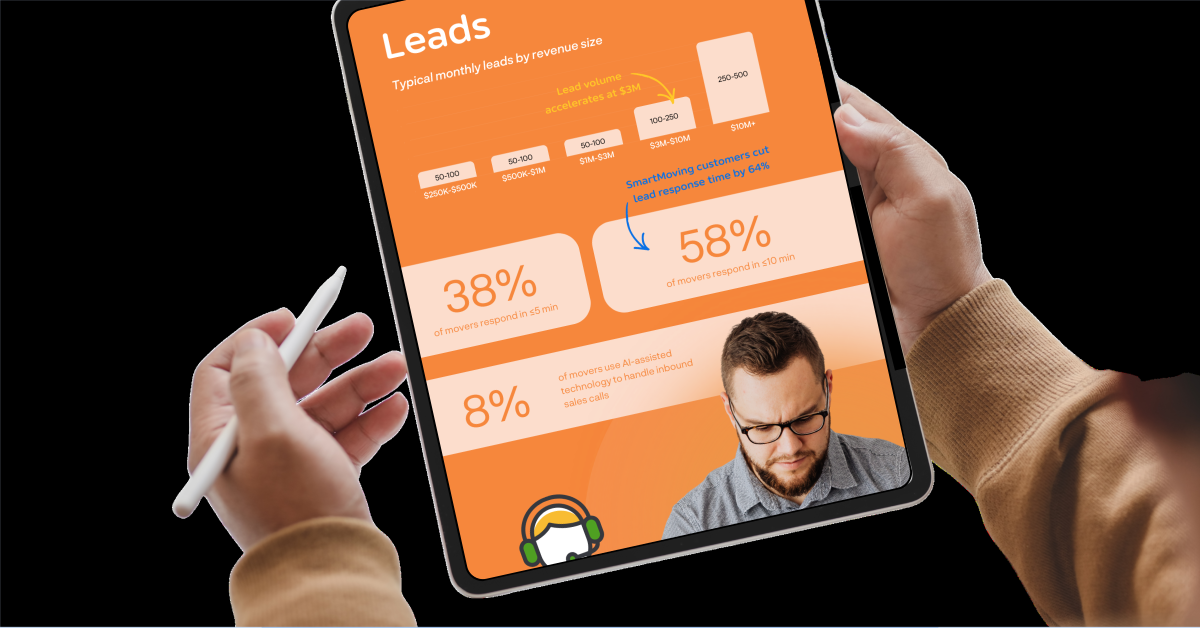
Only 38% of moving companies respond to leads within 5 minutes.
That’s a massive missed opportunity.
When someone is requesting a moving quote, they’re usually contacting multiple companies at once.
The company that responds first often wins the job.
Top performers understand this.
Nearly half of top moving companies respond within 5 minutes.
That’s not luck.
It’s systems.
The best movers use automated lead capture, instant notifications, and structured follow-ups so no inquiry sits unattended.
Because once a lead waits 30 minutes…
You’ve probably already lost the job.
3. The average time to book a job is 2.5 days
Most moves aren’t booked the same day.
Customers compare prices, talk to family members, and check reviews before choosing a mover.
Across the industry, the average time from lead to booked job is 2.5 days.
That means consistent follow-up wins jobs.
Companies that book faster typically:
- Send estimates within minutes
- Follow up the same day and again the next day
- Keep communication clear and simple
The companies that lose jobs?
They send quotes the next day… or forget to follow up entirely.
4. Top movers generate 2X more leads
Top-performing companies are playing a different game.
According to the report:
- Top movers generate ~460 leads per month
- The industry average is 215 leads
But here’s the important part.
Top movers aren’t just generating more leads.
They’re monetizing them better.
They respond faster, quote faster, and track their pipeline more closely.
The result?
More revenue per salesperson.
5. Sales reps generate $525K per year (on average)
One of the clearest sales benchmarks in the report:
- Top companies generate $715K in annual revenue per sales rep
- The industry average is $525K
That’s nearly a $200K difference per rep.
And it rarely comes down to talent alone.
The difference usually comes down to:
- Better quoting systems
- Structured follow-ups and scripts
- Clear sales accountability
When sales reps have the right tools, they can focus on closing jobs instead of chasing information.
6. Most sales teams work on commission
Another common thread among high-performing movers:
Sales compensation drives accountability.
Across the industry:
- 61% of reps earn sales commission
- Th average commission is 5-6% of the job value
Top companies lean into this structure.
Clear incentives create clear priorities.
That’s how teams book more profitable jobs.
The real opportunity: execution
Here’s the interesting part about these benchmarks.
None of them require massive changes.
Most movers don’t need new trucks.
Or bigger crews.
Or huge marketing budgets.
The biggest gains are hiding in execution.
According to the report, the largest opportunities are:
- Faster lead response
- Higher close rates
- Stronger follow-up systems
- Consistent sales tracking
Small improvements here compound quickly.
For example:
Improving your close rate from 39% to 50% increases booked jobs—and revenue—by about 28%.
Where do you stand?
Here are the 2026 sales benchmarks every moving company should know:
| Metric | Industry benchmark |
|---|---|
| Close rate | 39% |
| Speed to lead | 8 minutes |
| Time to book | 2.5 days |
| Leads per month | 215 |
| Revenue per sales rep | $525K |
These aren’t just numbers.
They’re signals.
They tell you where your business is winning—and where profit is slipping through the cracks.
The movers pulling ahead
The companies growing fastest in 2026 aren’t necessarily bigger.
They’re simply more disciplined.
They:
- Respond faster
- Quote faster
- Track their sales pipeline
- Hold reps accountable
- Focus on profitable jobs
That’s what separates the companies hitting their revenue goals and making 15%+ net profit.
See the full industry data
These benchmarks are just one section of the 2026 State of Moving Report.
The full report dives into:
✅ 3 strategic shifts operators are making right now
✅ What the top 20% of moving companies do differently
✅ Data you won’t see anywhere else—including lead volume, close rate, and net profit margin by revenue size
Plus free sales, marketing, and crew scorecards you can use immediately.


.svg)
.svg)


